
Choosing the proper moisture-resistant gypsum board for your home is one of the most intelligent decisions you can make—especially if you want walls that stay strong, durable, and mold-free. Many homeowners don’t realize how quickly humidity affects regular drywall until they see bubbling paint, stains, or even mold creeping up the surface. That’s why a proper MR Board selection matters. With so many options like Green Board, Moisture-Resistant Drywall, and Humidity-Resistant Gypsum Board, choosing the right one can feel overwhelming. But don’t worry—we’ll walk through everything step-by-step. By the end of this guide, you’ll know exactly what to choose, where to use it, and how to avoid common mistakes most people make.
This guide combines expert insights, a humanized tone, and real-world examples to help you make a confident decision. Whether you’re renovating a bathroom, upgrading a kitchen, or building a moisture-proof basement, this blog lays out your most intelligent choices—plus when to call professionals like Specialized Drywall OJ Inc. for a guaranteed long-lasting installation.
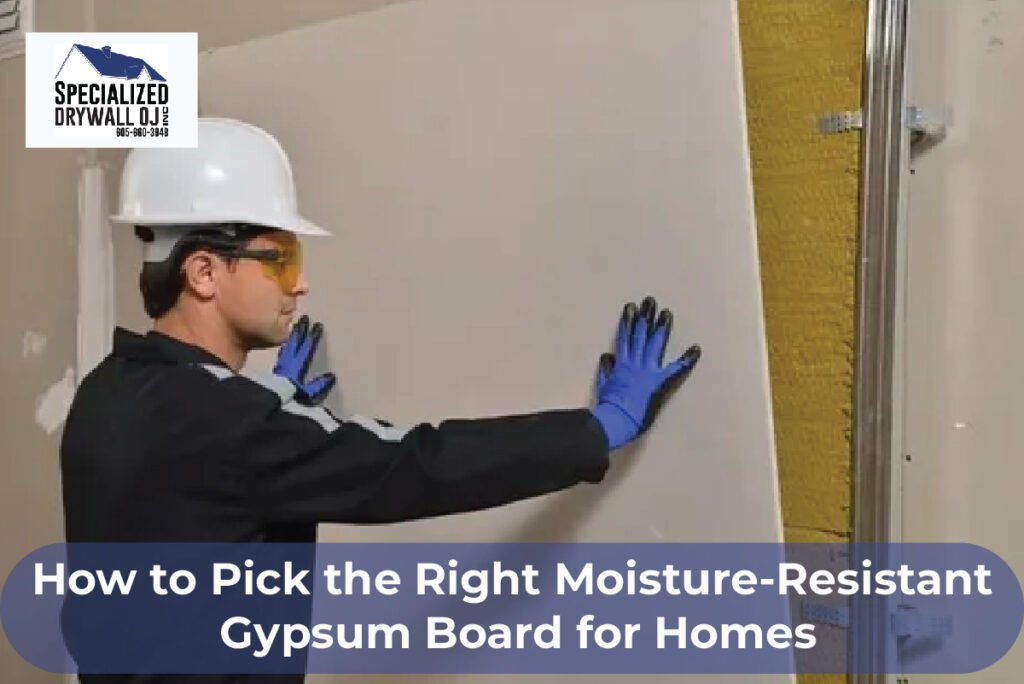
Understanding Moisture-Resistant Gypsum Board
Moisture-resistant gypsum board—often referred to as MR board—contains special additives that slow moisture absorption. Unlike regular drywall, this material is built to handle damp environments such as bathrooms, laundry rooms, and basements.
This type of resistant drywall includes a special core and protective paper that prevents swelling and warping. If you’re comparing multiple options in the market, you’ll also hear terms like “water-resistant gypsum board,” “moisture-proof gypsum board,” and “green board.” While they perform similarly, each has slight differences in impact resistance, thickness, and mold protection.
When exploring these options, many contractors prefer products designed for wet zones, especially when paired with professional gypsum installation services like those offered at Gypsum Board Services. This ensures that moisture protection is handled correctly from start to finish.
Why Moisture Resistance Matters More Than You Think
Humidity is a silent problem. You often don’t see the damage until it becomes expensive. That’s why installing a humidity-resistant gypsum board is a proactive choice rather than a reactive fix.
Not only does a moisture-resistant wall panel reduce structural damage, but it also improves your indoor air quality. Mold-resistant gypsum board has antimicrobial properties that help fight mold growth, making your home safer for kids, pets, and anyone with allergies.
While researching competitor sites, many miss one crucial point: moisture doesn’t just come from showers or cooking. Foundation leaks, temperature changes, or poor ventilation can also cause it. So even if you THINK your house is dry, chances are that some areas still need a moisture-resistant upgrade.
Comparing MR Board Options: Which One Do You Really Need?
When navigating moisture-resistant gypsum board types, you’ll notice several categories. Here’s how they differ and when you should use each one.
Green Board
Green Board is commonly found in residential renovation projects. It is ideal for areas with intermittent moisture but not for high-splash zones, such as shower walls.
Water-Resistant Gypsum Board
This board has a more durable coating and higher water tolerance. Use it for spaces like half-baths, kitchen backsplashes, and laundry rooms.
Moisture-Proof Gypsum Board
This version offers superior moisture resistance. It’s recommended for basements or utility rooms where humidity remains high year-round.
Mold-Resistant Gypsum Board
Perfect for bathrooms, this option has anti-mold additives that prevent mold spores from taking root. For many homeowners, this is the top choice for long-term health and safety.
Choosing between these boards depends on how much moisture the space gets. If you’re unsure, expert guidance from Specialized Drywall OJ Inc. can save you from costly mistakes.
Best Places to Use Moisture-Resistant Gypsum Boards
Knowing where to use the MR Board is just as important as choosing the right product. Here are the best placement ideas based on moisture exposure levels.
Bathrooms
The number one area where you must use gypsum board is for bathrooms. However, not all zones require the same level of protection.
- Shower walls: Use the strongest moisture-proof option.
- Rest of the walls: MR Board or Mold Resistant Gypsum Board works fine.
Kitchens
Cooking generates steam. Over time, it damages regular drywall. Behind sinks and near stoves, moisture-resistant products are essential.
Basements
Basements stay humid year-round. Installing moisture-resistant drywall in this area significantly reduces long-term issues like mold and rot.
Laundry Rooms
Washer leaks and humidity spikes are common. Humidity-resistant gypsum board protects against both.
Want a deeper look at moisture-sensitive spaces? Check out this related post from the experts:
Step-by-Step Guide to Accurately Cutting Gypsum Board.
Installation Tips to Maximize Durability
Even the best moisture-resistant gypsum board will fail if installed incorrectly. Here are the tips most professionals emphasize:
Seal the edges
The edges of the board are the most vulnerable spots. Always seal them during installation.
Use the right joint compound.
Standard compound absorbs moisture. For humid spaces, pick a mold-resistant or moisture-proof joint compound.
Leave space for ventilation.
Airflow is key. Even moisture-resistant drywall needs breathing space to stay effective.
Contractors also stress the importance of avoiding shortcuts. Many homeowners rush installation, only to see joints crack later. Partnering with an experienced drywall team ensures the job holds up for decades.
Budgeting: How Much Should You Expect to Spend?
Prices vary based on thickness, waterproofing level, and brand quality. Moisture-proof gypsum board with mold resistance usually costs more—but it’s worth every penny.
Here’s what affects the cost:
- Size of the room
- Labor charges
- Board type
- Moisture level of the area
- Extra sealing or coating needs
You can request a cost breakdown from most drywall service providers for transparency. Reputable companies like Specialized Drywall OJ Inc. ensure fair pricing and high-quality results.
Final Thoughts
Choosing the proper moisture-resistant gypsum board isn’t complicated once you understand your home’s moisture patterns. Whether you’re building a new house or remodeling a bathroom, selecting high-quality MR Board and installing it correctly prevents long-term structural issues, improves indoor air quality, and keeps your walls looking great for years.
If you’re still unsure which board to pick, professional help is always a smart move. With reliable experts and trusted resources like Specialized Drywall OJ Inc., your project will stay strong, protected, and moisture-free.
FAQs
1. Can I use regular drywall in my bathroom?
It’s not recommended. Regular drywall absorbs moisture quickly, which can lead to mold. Moisture-resistant drywall or mold-resistant gypsum board is a safer choice.
2. Is the Green Board waterproof?
No. The Green Board is moisture-resistant but not waterproof. It should not be used inside shower stalls.
3. Which is better: moisture-resistant or mold-resistant drywall?
Both are great. Moisture-resistant handles humidity; mold-resistant prevents fungal growth. Many homeowners combine both.
4. How long does the MR Board last?
With proper installation, Moisture Proof Gypsum Board can last decades without losing strength or protection.
5. Should I hire a professional for installation?
Yes. Incorrect installation leads to cracks, leaks, or mold growth. A professional ensures proper sealing and long-term durability.