
When people think about drywall, they often focus on installation or repair. However, drywall finishing is what truly determines how your walls and ceilings look, feel, and perform over time.
Poor finishing leads to visible seams, uneven textures, cracks, and paint issues. On the other hand, high-quality drywall finishing transforms ordinary walls into smooth, professional surfaces that enhance both appearance and property value.
Whether you own a home, manage rental properties, or operate a commercial building, professional drywall finishing plays a critical role in long-term value, durability, and aesthetics. In this guide, we’ll explain what drywall finishing is, why it matters, and how it directly impacts your property’s value.
What Is Drywall Finishing?
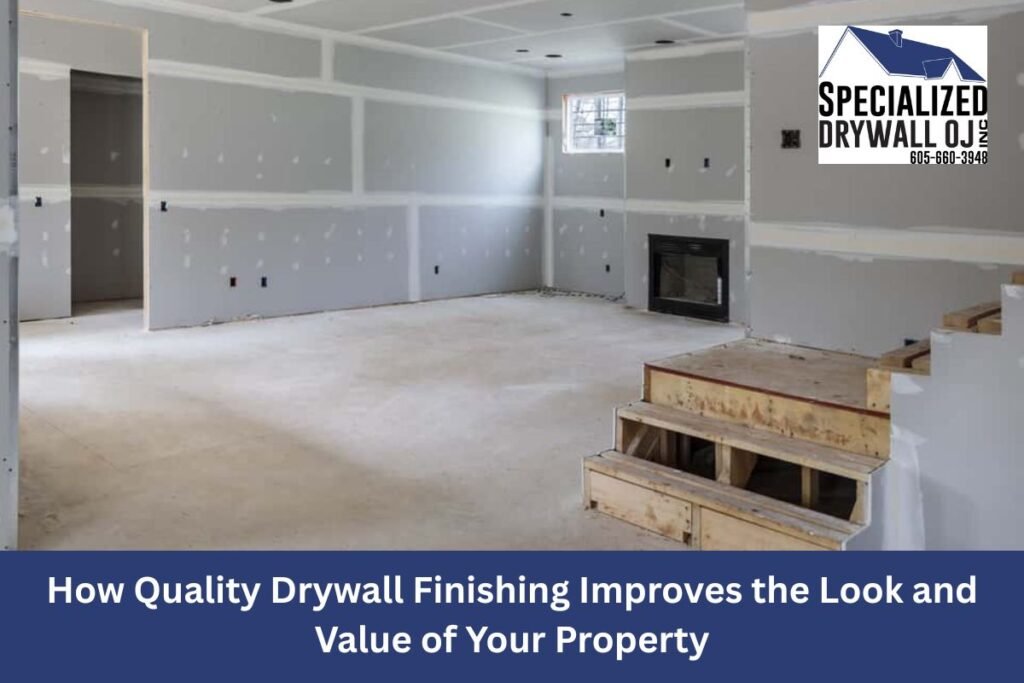
Drywall finishing is the process that comes after drywall installation. It involves preparing drywall panels to be smooth, seamless, and ready for paint or texture.
Drywall finishing typically includes:
- Taping joints between drywall panels
- Applying joint compound (mudding)
- Sanding surfaces smooth
- Applying texture (if required)
- Preparing walls and ceilings for paint
This stage determines whether your walls look professional or poorly done.
Why Drywall Finishing Matters More Than You Think
Drywall finishing isn’t just cosmetic—it affects:
- Visual appeal
- Paint performance
- Structural durability
- Long-term maintenance costs
Poor finishing can cause visible flaws that become more noticeable over time, especially under lighting.
How Drywall Finishing Improves Visual Appearance
Smooth, Seamless Walls
Professional drywall finishing eliminates:
- Visible seams
- Uneven joints
- Bumps and ridges
Smooth walls create a clean, modern look that appeals to buyers, tenants, and customers.
Better Paint Results
Even the best paint cannot hide poorly finished drywall. Proper finishing:
- Prevents paint streaks and shadows
- Ensures consistent color
- Allows paint to adhere correctly
This reduces repainting costs and extends the life of your interior finishes.
Professional Textures and Custom Finishes
Many properties use textures to add character or hide minor imperfections. Professional drywall contractors apply:
- Smooth finishes
- Knockdown texture
- Orange peel texture
- Custom finishes
Well-applied textures enhance design without looking outdated or messy.
How Drywall Finishing Increases Property Value
Residential Property Value
For homes, drywall finishing directly impacts:
- Buyer perception
- Home inspections
- Appraisal value
Buyers notice wall quality immediately. Smooth, well-finished walls:
- Make rooms appear larger
- Improve lighting reflection
- Increase overall appeal
Homes with poor drywall finishing often receive lower offers or require costly repairs before selling.
Commercial Property Value
In commercial spaces, drywall finishing affects:
- Tenant satisfaction
- Brand image
- Long-term lease value
Offices, retail stores, and professional buildings require clean, polished interiors. High-quality finishing reflects professionalism and reliability.
Durability and Long-Term Cost Savings
Professional drywall finishing isn’t just about looks—it’s about longevity.
Prevents Future Damage
Proper taping and compound application reduce:
- Cracking
- Joint separation
- Nail pops
This minimizes repair costs over time.
Reduces Maintenance Expenses
Poor finishing often leads to repeated touch-ups and repainting. Quality finishing:
- Holds up better over the years
- Maintains appearance longer
- Saves money long-term
Why DIY Drywall Finishing Often Fails
Drywall finishing is one of the most difficult drywall skills to master. Many DIY attempts result in:
- Visible seams
- Over-sanding
- Uneven textures
- Poor paint results
Professional drywall contractors have:
- Proper tools
- Technical skill
- Experience with lighting and angles
They ensure a flawless finish that DIY work rarely achieves.
Drywall Finishing in Renovations and Remodeling
During remodeling projects, drywall finishing plays a significant role in:
- Blending old and new walls
- Matching existing textures
- Creating consistent interiors
Professionals ensure new drywall blends seamlessly with existing structures.
Common Drywall Finishing Mistakes (And How Professionals Avoid Them)
Poor Joint Taping
Leads to cracking and visible lines.
Uneven Compound Application
Creates shadows and bumps.
Improper Sanding
Results in rough surfaces or damaged drywall paper.
Professional finishing avoids these issues through experience and precision.
Conclusion
Drywall finishing is one of the most important yet overlooked aspects of interior construction. High-quality finishing improves appearance, durability, and property value, making it a wise investment for both residential and commercial properties.
If you want walls and ceilings that look flawless, last longer, and increase value, professional drywall finishing is essential.
FAQs
Q1: What is the difference between drywall installation and drywall finishing?
Installation involves hanging drywall panels, while finishing makes them smooth and ready for paint or texture.
Q2: How long does drywall finishing take?
Most residential projects take 1–3 days, depending on size and drying time.
Q3: Can drywall finishing increase home value?
Yes, high-quality finishing improves appearance and buyer appeal, increasing resale value.
Q4: What drywall finish is best for resale?
Smooth finishes are generally preferred for modern resale appeal.
Q5: Should drywall finishing be done by professionals?
Yes, professional finishing ensures durability, appearance, and long-term savings.