
Drywall installation is a cornerstone of every construction and renovation project. While most people focus on materials, tools, and skills, weather plays a critical role in the success of drywall installation. Temperature, humidity, and precipitation can affect joint compound drying times, panel stability, and the overall finish of your walls and ceilings.
In this guide, we’ll explore how different weather conditions affect drywall installation, common weather-related problems, and best practices to ensure a smooth, durable finish.
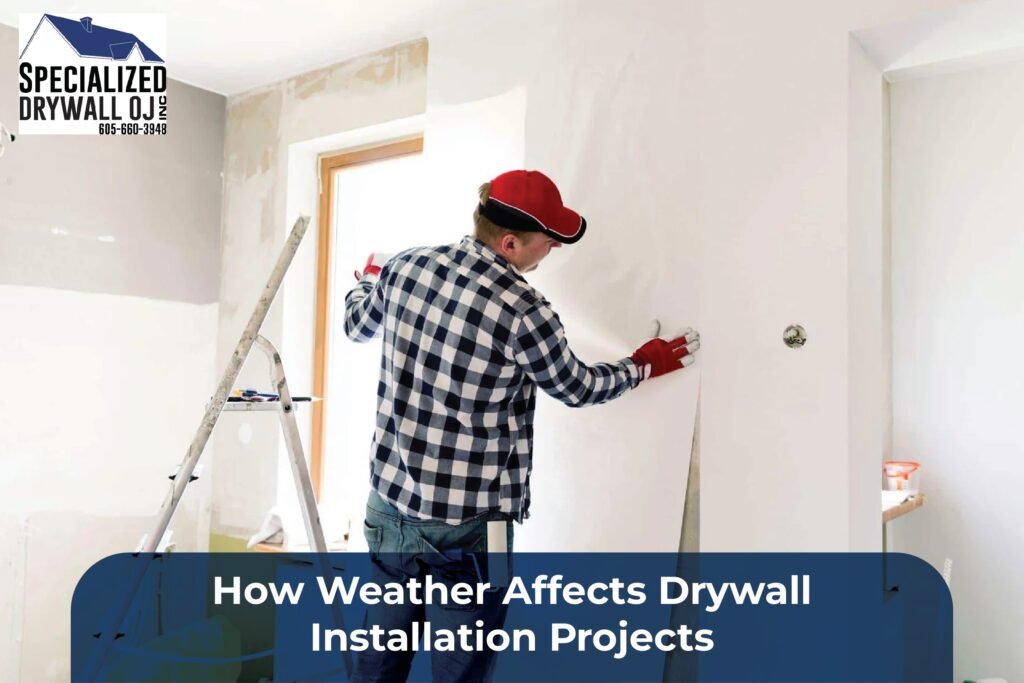
The Role of Weather in Drywall Installation
Weather affects drywall projects in multiple ways:
- Material performance: Drywall sheets, joint compounds, adhesives, and fasteners all react to temperature and moisture.
- Drying and curing times: Joint compound and mud can dry too fast or too slow, depending on the climate.
- Structural stability: Wood framing and metal studs can expand, contract, or warp under extreme weather.
- Long-term durability: Improper installation in unfavorable weather can lead to cracks, mold, or delamination.
Proper planning and understanding weather impacts can save time, prevent costly repairs, and ensure a flawless finish.
Temperature Effects on Drywall
Hot Weather Challenges
High temperatures can significantly impact drywall installation:
- Rapid drying of joint compound: This can cause cracks and uneven seams.
- Shrinkage: Excessive heat may cause boards and compound to shrink, compromising wall integrity.
- Worker efficiency: Dry, hot conditions make it challenging to spread mud evenly.
Tips for hot weather:
- Install drywall in shaded or climate-controlled areas.
- Use slower-setting joint compounds designed for heat.
- Keep the workspace ventilated and avoid directing hot air onto the walls.
Cold Weather Challenges
Cold weather brings its own set of issues:
- Thickened joint compound: Makes spreading difficult and slows finishing.
- Delayed curing: Cold temperatures can prevent mud from properly bonding.
- Material brittleness: Drywall panels and fasteners are more prone to cracking and damage.
Tips for cold weather:
- Maintain indoor temperatures above 50°F during and after installation.
- Precondition materials indoors before use.
- Avoid freezing conditions for joint compound and adhesives.
Humidity and Moisture Impacts
Humidity is often the most underestimated weather factor affecting drywall:
High Humidity
- Slows drying of joint compound and paint.
- Increases the risk of mold and mildew.
- It can cause panels to absorb moisture and warp.
High humidity solutions:
- Use dehumidifiers to reduce indoor moisture.
- Ensure proper ventilation during and after installation.
- Wait for the joint compound to fully cure before applying paint or additional coats.
Low Humidity
- Causes the ointment compound to dry too quickly.
- May lead to shrinkage cracks along seams and corners.
- Increases stress on fasteners and framing connections.
Low-humidity solutions:
- Lightly mist walls before application to slow drying if necessary.
- Avoid direct heat blowing on the surface.
- Use compounds formulated for dry environments.
Precipitation and Outdoor Weather
While indoor installation is less directly affected by rain or snow, exterior weather still matters:
- Delivery and storage: Wet drywall panels can swell or warp if exposed to rain.
- Framing and structures: Moisture can cause wood or metal studs to twist, affecting wall alignment.
- Leaks: Water infiltration during construction can damage drywall before installation.
Best practices:
- Store panels indoors or under covered, dry areas.
- Inspect boards for moisture damage before installation.
- Install vapor barriers in high-moisture environments.
Seasonal Considerations
Winter
- Requires heated indoor spaces.
- Maintain steady temperatures to prevent cracking or slow curing.
- Monitor humidity levels to prevent condensation on walls.
Spring
- Fluctuating temperatures and humidity require careful monitoring.
- Early spring rains can increase indoor moisture levels.
Summer
- High heat and humidity can accelerate drying, cause blisters, or lead to warping.
- Ventilation and dehumidifiers are essential for maintaining balance.
Fall
- Moderate temperatures are ideal for drywall projects.
- Shorter daylight hours may affect work schedules.
Common Weather-Related Drywall Problems
Even with careful installation, weather can lead to issues:
- Hairline cracks: Expansion and contraction from temperature swings.
- Nail pops and loose fasteners: Framing movement due to moisture and temperature changes.
- Uneven finishes: Rapid drying or high humidity affects texture and smoothness.
- Mold and delamination: Moisture exposure before or after installation.
Mitigation: Plan installation with weather in mind and monitor temperature and humidity throughout the project.
Best Practices to Minimize Weather Impact
Before Installation
- Store drywall indoors and allow it to acclimate.
- Inspect materials for moisture or damage.
- Schedule projects around favorable weather forecasts.
During Installation
- Maintain indoor temperatures between 55°F and 5°F.
- Use ventilation, dehumidifiers, or humidifiers as needed.
- Avoid rapid temperature changes during drying.
After Installation
- Continue climate control for at least 48 hours.
- Protect newly installed walls from drafts, leaks, and direct heat.
- The compound is fully cured before sanding or painting.
Tools & Techniques
- Climate control units: heaters, AC, and dehumidifiers.
- Ventilation fans: Reduce excess moisture and speed up drying.
- Monitoring: Track indoor humidity and temperature continuously.
- Material selection: Use weather-appropriate joint compounds.
Conclusion
Weather directly affects drywall installation, influencing material behavior, drying times, and the final finish. By understanding temperature, humidity, precipitation, and seasonal effects, you can plan effectively to prevent cracks, warping, and mold. Proper storage, climate control, and careful installation ensure durable, high-quality drywall results.
For best results, rely on professional guidance or services when managing drywall projects in extreme or variable weather conditions.
FAQs
Ans: 50–95°F is optimal for joint compound and drywall performance.
Ans: High humidity slows drying and may cause mold; low humidity dries materials too quickly, causing cracks.
Ans: Yes, with heated indoor spaces and proper material conditioning.
Ans: Yes, wet boards can swell, warp, or become mold-prone.
Ans: Control indoor temperature and humidity, choose the right compounds, and schedule installations around favorable conditions.