
Drywall is a critical part of nearly every modern building, but not all drywall projects are the same. One of the most common questions property owners ask is:
What’s the difference between residential and commercial drywall services?
While both involve installing and finishing drywall, the scope, materials, building codes, timelines, and expertise required can vary significantly. Choosing the wrong contractor—or misunderstanding what your project needs—can lead to delays, compliance issues, and costly rework.
In this comprehensive guide, we’ll break down residential vs commercial drywall services, explain how they differ, and help you determine which type of service is right for your project.
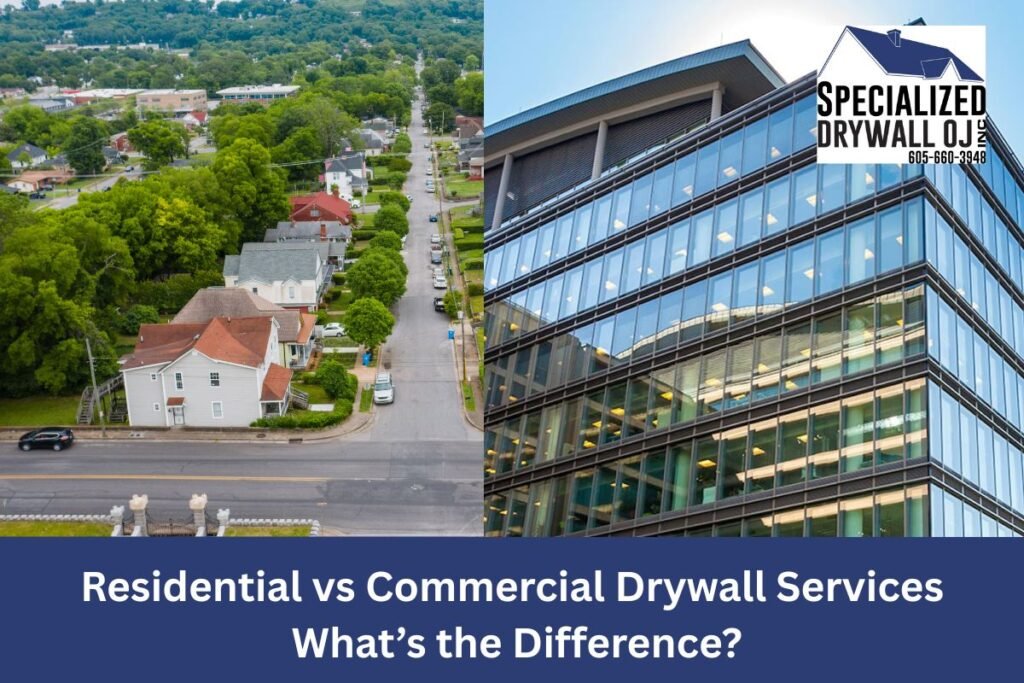
What Are Residential Drywall Services?
Residential drywall services focus on homes and living spaces. These projects are typically smaller in scale and more design-focused.
Common Residential Properties
- Single-family homes
- Apartments and condos
- Townhouses
- Basements and garages
Typical Residential Drywall Services Include:
- Drywall installation for new homes
- Drywall repair for cracks, holes, or water damage
- Sheetrock replacement
- Drywall finishing and texture application
- Remodeling and renovation drywall work
Residential drywall work emphasizes appearance, comfort, and customization.
What Are Commercial Drywall Services?
Commercial drywall services involve large-scale, non-residential buildings. These projects require advanced planning, specialized materials, and strict compliance with building codes.
Common Commercial Properties
- Office buildings
- Retail stores and shopping centers
- Warehouses
- Schools and universities
- Hospitals and healthcare facilities
- Hotels and multi-unit complexes
Typical Commercial Drywall Services Include:
- Large-scale drywall installation
- Fire-rated wall assemblies
- Soundproof and acoustic drywall systems
- High-ceiling and open-space installations
- Commercial renovations and tenant improvements
Commercial drywall focuses on durability, safety, and performance.
Key Differences Between Residential and Commercial Drywall Services
Project Size and Scope
Residential Projects
- Smaller areas
- Shorter timelines
- Fewer workers required
Commercial Projects
- Large square footage
- Multiple floors or units
- Coordinated work schedules
Commercial drywall projects often involve multiple contractors working simultaneously, requiring precise coordination.
Materials Used
Residential Drywall Materials
- Standard drywall sheets
- Moisture-resistant drywall for bathrooms and kitchens
- Lightweight materials for easier installation
Commercial Drywall Materials
- Fire-rated drywall
- Impact-resistant drywall
- Soundproof drywall systems
- Specialized gypsum board assemblies
Commercial buildings must meet specific safety and performance standards, which require higher-grade materials.
Building Codes and Compliance
One of the most significant differences between residential and commercial drywall services is code compliance.
Residential Codes
- Focus on safety and livability
- Less complex requirements
Commercial Codes
- Strict fire resistance ratings
- Sound control standards
- Accessibility and safety regulations
Commercial drywall contractors must understand local, state, and federal building codes to ensure compliance.
Drywall Installation Techniques
Residential Installation
- Lower ceilings
- Simpler wall layouts
- Less reinforcement required
Commercial Installation
- Tall walls and ceilings
- Metal framing systems
- Reinforced assemblies
Commercial drywall installation requires specialized equipment and experienced crews.
Drywall Finishing Standards
Residential Finishing
- Smooth finishes
- Decorative textures
- Visual appeal is a priority.
Commercial Finishing
- Clean and consistent finishes
- Durability over decoration
- Performance-based results
While appearance still matters in commercial spaces, function and longevity are often more critical.
Cost Differences Between Residential and Commercial Drywall
Residential Drywall Costs
- Lower material costs
- Shorter labor hours
- More flexibility in scheduling
Commercial Drywall Costs
- Higher-grade materials
- Larger labor crews
- Extended project timelines
Although commercial drywall projects cost more upfront, they are designed for long-term performance and reduced maintenance.
Timeline and Scheduling Differences
Residential projects usually follow flexible schedules. Commercial drywall projects often operate under:
- Strict deadlines
- Phased construction plans
- After-hours or overnight work
Commercial drywall contractors must meet timelines without disrupting business operations.
Fire and Sound Requirements
Residential Buildings
- Bare fire-resistant drywall in certain areas
- Limited soundproofing
Commercial Buildings
- Fire-rated assemblies required by code
- Acoustic drywall systems
- Sound separation between units or offices
These requirements significantly impact installation methods and material selection.
Contractor Expertise Matters
Not all drywall contractors are equipped to handle commercial projects.
Residential Contractors Focus On:
- Detail-oriented finishing
- Homeowner communication
- Custom design needs
Commercial Contractors Focus On:
- Large-scale coordination
- Code compliance
- Safety and efficiency
Choosing a contractor with the right experience is critical.
Choosing the Right Drywall Service for Your Project
Choose Residential Drywall Services If:
- You’re working on a home
- The project is small or medium-sized.
- Design and aesthetics are a priority.y
Choose Commercial Drywall Services If:
- You own or manage a commercial building
- The project requires a fire or sound rating.
- You need strict compliance and fast timelines.
A professional assessment ensures the correct approach.
Conclusion
Understanding the difference between residential and commercial drywall services helps you make informed decisions and avoid costly mistakes. While both share similarities, they differ greatly in materials, codes, timelines, and expertise required.
Hiring the right drywall professionals ensures your project is completed safely, efficiently, and to the highest standards.
FAQs
Q1: Can the same contractor handle residential and commercial drywall?
Yes, but they must have experience with both types of projects.
Q2: Is commercial drywall stronger than residential drywall?
Yes, commercial drywall uses heavier-duty materials designed for durability and safety.
Q3: Why is commercial drywall more expensive?
Higher-grade materials, labor, and code compliance increase costs.
Q4: Do residential buildings need fire-rated drywall?
Only in specific areas, such as garages or shared walls.
Q5: How do I know which drywall service I need?
A professional drywall contractor can evaluate your project and recommend exemplary service.