
When you start any construction or remodeling project, one thing becomes clear pretty quickly—wallboard thickness matters more than most people realize. Picking the right board thickness can affect structural integrity, sound performance, fire resistance, ease of installation, and even long-term maintenance. Many builders learn this through experience, but knowing these measurements up front gives you a huge advantage. Whether you’re planning interior walls, ceilings, or specialized rooms, understanding the wallboard thickness chart, standard wallboard thicknesses, and where each type works best helps avoid costly mistakes.
Additionally, choosing the right product is easier when you understand how modern gypsum board thicknesses vary by project. And with updated construction standards, homeowners now demand quieter rooms, safer interiors, and durable finishes. In this guide, you’ll discover a simple, builder-friendly breakdown of wallboard thicknesses, typical applications, and intelligent recommendations to keep your work efficient and professional. If you need expert assistance, you can also explore services such as wallboard installation from Specialized Drywall OJ Inc. for dependable support.
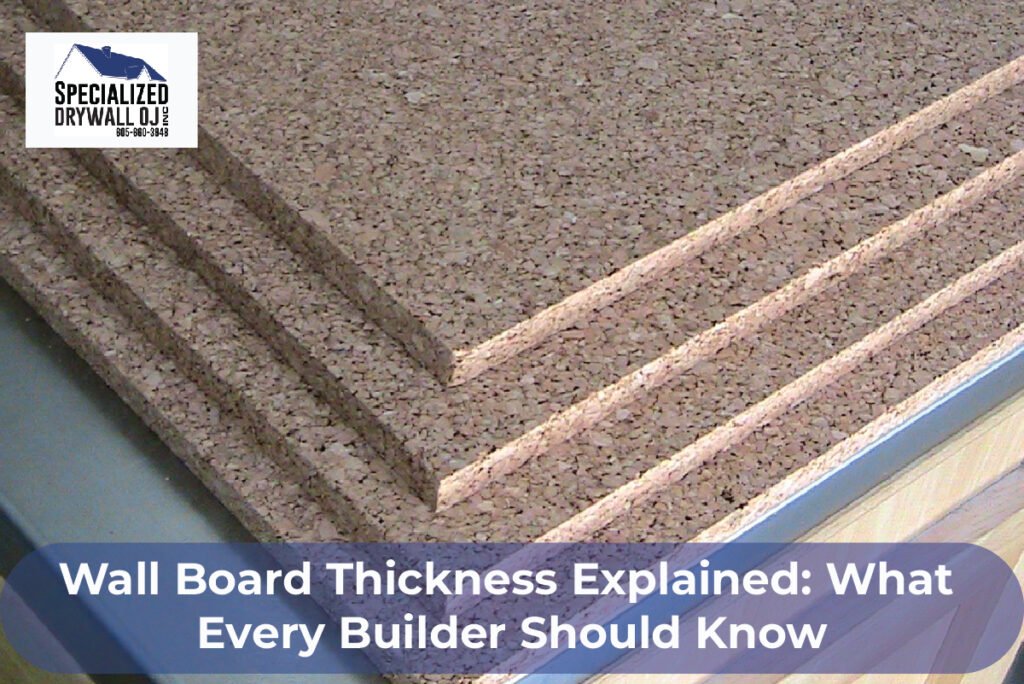
Understanding the Importance of Wallboard Thickness
Wallboard might look simple, but thickness affects nearly everything—from sound control and fire safety to installation stability. Builders use different thicknesses depending on whether the board is going along studs, ceilings, high-traffic walls, or commercial structures. That’s why reviewing a wallboard thickness chart before starting your project is essential.
In residential construction, the most common standard wallboard thickness remains 1/2 inch. Yet newer builds often include variations, such as 5/8-inch fire-resistant board for garages or multi-family units. These subtle differences affect the final result’s performance, so understanding each measurement helps ensure the board performs precisely as you want it to.
Common Wall Board Sizes Every Builder Should Know
When looking at wallboard sizes, the two most common thicknesses are 1/2 inch and 5/8 inch. Both come with unique strengths. The 1/2-inch option works best for most interior walls thanks to its balance of durability and lightness. Builders appreciate how easy it is to cut and lift, especially when working alone.
On the other hand, 5/8-inch wallboard is the top choice for commercial construction or areas where fire ratings matter. This type is often included in a drywall thickness chart because it offers improved soundproofing and rigidity. For ceilings, walls prone to moisture, and spaces with insulation requirements, it performs reliably over time.
Exploring Gypsum Board Thickness and Where It Works Best
Gypsum board comes in several thicknesses depending on your project needs. As construction trends evolve, the 5/8-inch gypsum board thickness is gaining popularity for its strong fire-resistant properties. Builders installing garage walls, utility rooms, and shared apartment walls appreciate the added safety this thickness provides.
Furthermore, 1/4-inch and 3/8-inch boards remain specialty options. They’re most commonly used for patching projects, overlays, and curved designs. When paired with expert installation services—such as those offered by Wallboard Services—they help create strong, professional finishes even in tricky spaces.
Fire-Resistant Wall Board Thickness and Code Compliance
Fire-resistant boards follow specific guidelines that help builders meet building code requirements. Typically, the 5/8-inch fire-resistant wallboard thickness meets the required rating for attached garages, multi-family projects, and commercial corridors. Its composition slows heat transfer and provides essential protection.
Because of its density, this type of board also helps with sound control, making it a dual-purpose upgrade. If you’re unsure about the fire rating requirements for your project, reviewing a recent wallboard thickness guide or speaking with a licensed contractor helps ensure you stay compliant and safe.
Wall Board Thickness for Ceilings: What to Choose
Ceilings often require thicker, sturdier boards because gravity and structural movement place greater stress on them than on vertical surfaces. That’s why builders frequently choose 5/8-inch wallboard for ceilings. It resists sagging and holds up well when combined with insulation or recessed lighting.
However, some homes still use 1/2-inch boards for ceilings when the framing spacing is tight. If you are working on ceiling installation for the first time or need a reference for curvature and angles, check out the installation tips available on this wallboard installation guide.
When Soundproof Wall Board Thickness Becomes Essential
With more people working from home than ever before, soundproofing has become a high priority. Choosing the right thickness of soundproof wallboard makes a noticeable difference in how sound travels between rooms. For best results, builders lean toward a 5/8-inch board due to its greater mass and density.
You can also pair wallboards with insulation, resilient channels, or sound-dampening compounds to improve performance. While thinner options may work in simple residential spaces, thicker boards create a superior barrier for media rooms, offices, and shared living spaces.
A Complete Wall Board Thickness Guide for Modern Builders
Today’s construction standards require a good understanding of thickness variations. Whether you’re reviewing a wallboard thickness chart or selecting materials for a renovation, knowing your options ensures a smoother installation, better durability, and consistent results.
Before purchasing materials, always match the board thickness with your framing, project goals, and building code requirements. Even professional installers rely on updated resources and expert advice, such as the team at Specialized Drywall OJ Inc., to ensure every wall meets the highest standards.
Final Thoughts
Choosing the right wallboard thickness takes a bit of planning, but once you understand the differences, the selection becomes simple. Always consider the environment, safety requirements, structural demands, and long-term durability. When in doubt, referencing a reliable wallboard thickness guide can help you make the right call.
Suppose your project requires professional assistance, specialized installation, or expert material recommendations. In that case, you can always explore wallboard services and guides at SpecializedDrywallOJInc.com to ensure your project runs smoothly from start to finish.
FAQs
1. What is the most common wallboard thickness for homes?
Most residential builders use 1/2-inch wallboard for interior walls because it’s strong, versatile, and easy to install.
2. Which thickness is best for ceilings?
Ceilings typically require 5/8-inch wallboard to prevent sagging and provide structural strength.
3. Is thicker wallboard better for soundproofing?
Yes. 5/8-inch wallboard offers better sound control than thinner options.
4. Are fire-resistant boards required by code?
In many areas, yes—especially for garages, commercial spaces, and multi-family units.
5. Can I mix different wallboard thicknesses in one project?
You can, but ensure the structure supports the variations. Mixing thicknesses may affect finishing and transitions.