
Bathrooms and basements are two of the most moisture-prone areas in any home. Steam from showers, poor ventilation, underground humidity, and occasional leaks create conditions that can cause standard drywall to deteriorate quickly. When drywall absorbs moisture, it softens, warps, and becomes a breeding ground for mold. That’s why choosing moisture-resistant drywall for bathrooms and basements is essential for long-term durability and indoor air quality.
In this guide, we’ll explain how moisture-resistant drywall works, compare the different types available, discuss where each option should be used, and outline best installation practices to protect your home from costly water damage.
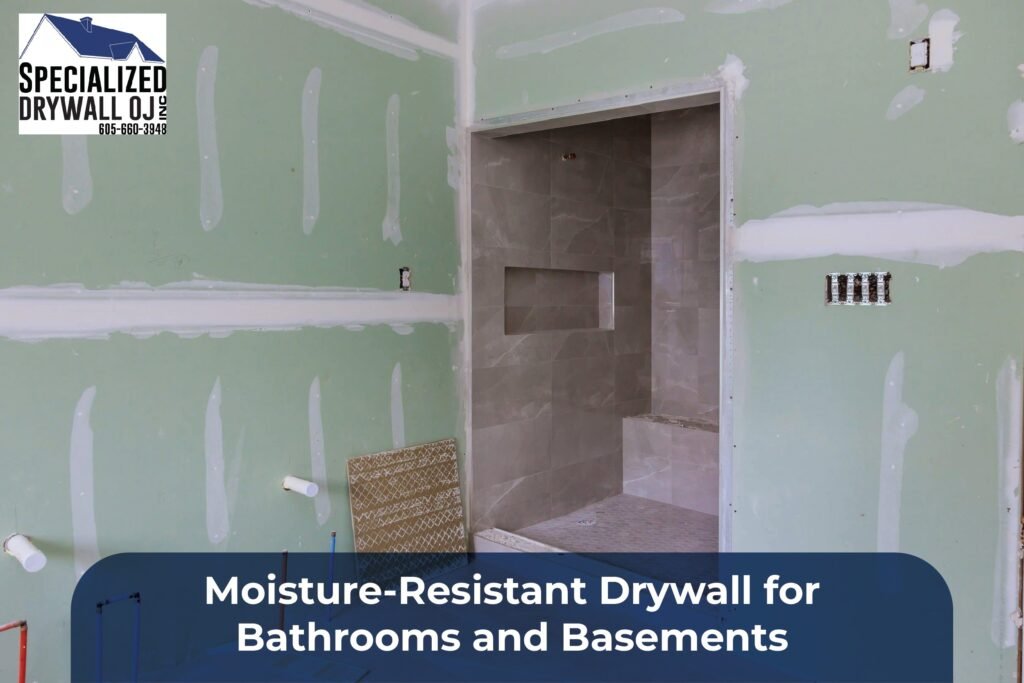
Why Moisture Is a Serious Problem in Bathrooms & Basements
Moisture problems develop differently in bathrooms and basements, but both environments pose a risk to drywall.
Bathrooms are exposed to daily steam, splashes, and condensation. Even with an exhaust fan, humidity levels can rise significantly during showers. Over time, repeated exposure can weaken standard drywall, leading to peeling paint, soft spots, and mold growth behind the walls.
Basements, on the other hand, are prone to ground moisture, foundation seepage, and temperature differences that cause condensation. Because basements are below grade, they naturally hold more humidity than upper floors. Without proper materials, drywall installed in basements can trap moisture and deteriorate from the inside out.
Using standard drywall in these areas often results in:
- Mold and mildew growth
- Musty odors
- Crumbling or sagging wall sections
- Costly repairs and health concerns
- Reduced property value
Moisture-resistant drywall is specifically designed to handle these challenges.
What Is Moisture-Resistant Drywall?
Moisture-resistant drywall is a specially manufactured gypsum board designed to resist humidity and minor water exposure. Unlike regular drywall, which has a standard paper face, moisture-resistant versions use treated paper or fiberglass mats that slow down moisture absorption.
It’s important to understand that moisture-resistant drywall is not waterproof. It can handle humid environments and occasional splashes, but it should not be used in areas with direct, constant water exposure, such as inside shower enclosures.
The main purpose of this drywall type is to:
- Reduce water absorption
- Resist mold and mildew growth
- Maintain structural integrity in humid environments
- Extend the life of wall finishes
Types of Moisture-Resistant Drywall
There are several types of drywall designed for high-moisture areas. Choosing the right one depends on the level of exposure and the specific room conditions.
1. Green Board Drywall
Green board is one of the most common moisture-resistant drywall options. It features a water-resistant coating on the paper facing that slows moisture penetration.
Best used for:
- Bathroom walls (outside shower areas)
- Basement living spaces
- Laundry rooms
- Kitchen walls
While green board resists humidity better than standard drywall, it should not be installed in direct contact with water.
2. Purple Drywall (Enhanced Mold Resistance)
Purple drywall offers improved resistance to both moisture and mold compared to green board. It is manufactured with enhanced additives and treated surfaces that provide superior protection.
Ideal applications include:
- Full bathroom installations
- High-humidity basements
- Utility rooms
- Areas prone to condensation
Purple drywall is often considered a premium choice for residential renovations.
3. Paperless Drywall
Paperless drywall replaces traditional paper backing with a fiberglass mat. Because mold feeds on paper, removing it significantly reduces the risk of its growth. Advantages include:
- Strong mold resistance
- Improved durability
- Better performance in damp basements
- Long-term moisture protection
This type is commonly recommended for finished basements where humidity levels fluctuate.
4. Cement Board (For Wet Areas)
Cement board is not technically drywall, but it is often discussed alongside moisture-resistant options. It is made from cement and reinforcing fibers and is designed for wet environments.
Use cement board for:
- Shower walls
- Bathtub surrounds
- Steam rooms
- Areas with direct water exposure
Unlike moisture-resistant drywall, cement board can withstand continuous exposure when properly sealed.
Moisture-Resistant Drywall vs Waterproof Systems
A common misconception is that moisture-resistant drywall eliminates the need for waterproofing. This is not true. In wet areas like showers, cement board combined with a waterproof membrane is still required.
Moisture-resistant drywall is suitable for spaces with indirect water exposure. For example:
- Bathroom walls outside shower enclosures
- Basement recreation rooms
- Hallways near bathrooms
- Powder rooms
Understanding the difference between moisture resistance and waterproofing is critical to preventing future problems.
Where to Use Each Type in Your Home
Choosing the correct material ensures durability and compliance with building standards.
Recommended applications:
- Bathroom ceilings → Purple drywall or mold-resistant drywall
- Bathroom walls (outside shower) → Green board or purple drywall
- Shower enclosures → Cement board + waterproof membrane
- Finished basements → Paperless drywall or purple drywall
- Laundry rooms → Moisture-resistant drywall
- Basement exterior walls → Mold-resistant drywall with vapor barrier
Matching the drywall type to the space’s moisture level helps prevent premature failure.
Installation Tips for Long-Term Protection
Even the best drywall will fail if installed improperly. Proper preparation and finishing are essential.
Before installation:
- Test basement humidity levels
- Fix foundation cracks or leaks
- Install vapor barriers if required
- Ensure proper bathroom ventilation
During installation:
- Keep drywall panels slightly elevated off the cement floors
- Use moisture-resistant joint compound
- Seal seams and corners properly
- Avoid over-saturating with water during finishing
After installation:
- Apply mold-resistant primer and paint
- Install and maintain exhaust fans
- Use dehumidifiers in damp basements
- Inspect annually for leaks or condensation
Professional installation significantly reduces the risk of hidden moisture damage.
Cost Considerations
Moisture-resistant drywall typically costs slightly more than standard drywall, but the investment pays off in durability and mold prevention.
General cost differences:
- Standard drywall → Lowest cost
- Green board → Slightly higher
- Purple drywall → Moderate increase
- Paperless drywall → Premium pricing
- Cement board → Higher material and labor cost
Although the upfront cost may be higher, preventing mold remediation and structural repairs saves money in the long term.
Building Code & Best Practices
Local building codes often require moisture-resistant materials in specific areas. Many municipalities mandate cement board or waterproof backing in shower areas. Ventilation requirements for bathrooms are also enforced to reduce humidity buildup.
Before starting a renovation, it’s wise to consult professionals familiar with local regulations. Proper compliance ensures safety and protects property value.
Conclusion
Moisture-resistant drywall for bathrooms and basements is a smart investment for homeowners looking to protect their property from mold, humidity damage, and costly repairs. While standard drywall may work in dry living spaces, high-moisture areas require specialized materials designed to withstand humidity.
By selecting the appropriate drywall type—whether green board, purple drywall, paperless drywall, or cement board—you can create a durable, long-lasting interior finish. Pairing quality materials with professional installation and proper ventilation ensures your bathroom or basement remains safe, healthy, and structurally sound for years to come.
If you’re planning a renovation or finishing a basement, consulting drywall professionals can help you choose the best solution for your home’s specific moisture conditions.
FAQs
Ans: Moisture-resistant drywall is gypsum board treated to resist humidity and reduce mold growth. It is ideal for bathrooms, basements, and laundry rooms, but it is not fully waterproof.
Ans: No. Shower areas require cement board and a waterproof membrane because moisture-resistant drywall cannot withstand direct, continuous water exposure.
Ans: Purple drywall typically offers stronger mold and moisture resistance compared to green board, making it a better choice for high-humidity areas.
Ans: If you are finishing a basement, using mold-resistant or paperless drywall is highly recommended to prevent humidity-related damage.
Ans: It generally costs slightly more than standard drywall, but it reduces long-term repair and mold remediation expenses.
Ans: It reduces the risk but does not eliminate mold. Proper ventilation and moisture control are still necessary.