
When planning a ceiling, wall, or renovation project, many people get stuck between Sheetrock and cement board. At first, both may seem similar—but choosing the wrong one can lead to moisture damage, cracks, or unnecessary costs.
If you’re a homeowner, new buyer, or contractor trying to make the right decision, this guide will give you a clear comparison based on real usage—not just surface-level differences.
What Is Sheetrock?
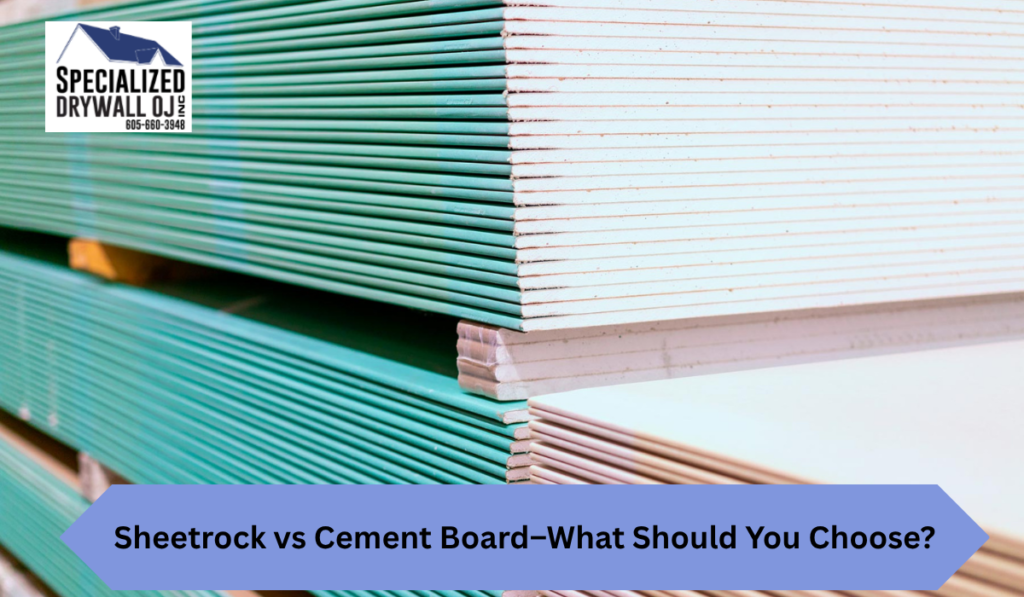
Sheetrock is a commonly used term for gypsum board (drywall). It is made from a gypsum core covered with layers of paper.
It is widely used for:
- Interior walls
- Ceilings
- Partition walls
It is known for its lightweight, easy-to-install nature, making it a common choice in residential and commercial interiors.
What Is Cement Board?
Cement board is made from cement mixed with reinforcing fibers. It is heavier and stronger than gypsum board.
It is mainly used for:
- Tile backing
- Bathrooms and showers
- Kitchens and wet areas
- Exterior surfaces
It is preferred where moisture and durability are major issues.
Key Difference Between Sheetrock and Cement Board
The main difference comes down to environment and purpose:
- Sheetrock → Best for dry indoor spaces
- Cement board → Best for wet or high-moisture areas
Cement board is stronger and moisture-resistant, while Sheetrock is easier to work with and better for finishing.
Sheetrock vs Cement Board (Full Comparison Table)
| Feature | Sheetrock (Gypsum Board) | Cement Board |
| Weight | Light | Heavy |
| Installation | Easy | Difficult |
| Moisture Resistance | Low (unless special type) | High |
| Strength | Moderate | High |
| Finish | Smooth | Rough |
| Cost | Lower | Higher |
| Use Area | Indoor dry spaces | Wet & exterior areas |
Pros of Sheetrock
Easy to Install
Sheetrock is simple to cut and install, which reduces labor time and effort.
Smooth Surface for Finishing
It provides a clean surface that is ideal for paint or decorative finishes.
Lightweight
Because it is lighter, it is easier to handle and imposes less load on the structure.
Lower Cost
It’s usually cheaper than cement board, especially on larger jobs.
Cons of Sheetrock
Weak Against Moisture
Exposure to water can cause swelling, damage, or mold growth
Less Durable
It can crack or dent more easily under impact than cement board.
Not Suitable for Wet Areas
Standard Sheetrock should not be used in areas like showers or outdoor spaces.
Pros of Cement Board
Strong and Durable
Cement board can handle impact and heavy use better than gypsum board.
Moisture Resistant
It performs well in wet areas and does not easily swell or deteriorate.
Suitable for Tiles
It provides a solid base for tiles, especially in bathrooms and kitchens.
Heat Resistance
It works well in areas exposed to high temperatures, such as near fireplaces.
Cons of Cement Board
Heavy Material
It is harder to carry and install due to its weight.
Difficult Installation
Cutting and fixing cement board requires tools and experience.
Higher Cost
Material and labor costs are usually higher than Sheetrock’s.
Where Should You Use Sheetrock?
Sheetrock works best in:
- Living rooms
- Bedrooms
- Offices
- Ceilings in dry areas
It is ideal where appearance and ease of installation matter more than moisture resistance.
Where Should You Use Cement Board?
Cement board is suitable for:
- Bathrooms and showers
- Kitchens (especially behind tiles)
- Outdoor walls
- Areas exposed to water or heat
What Most People Get Wrong
Many buyers assume one material can be used everywhere, which is not true.
- Using Sheetrock in wet areas leads to damage
- Using cement board in dry areas increases the cost unnecessarily
- Ignoring installation quality reduces lifespan
Each material has a specific purpose.
Common Buyer Mistakes
Avoid these errors:
- Choosing based only on price
- Ignoring moisture conditions
- Using the wrong board type for the area
- Hiring inexperienced installers
These mistakes often lead to repair costs later.
Practical Advice Before You Decide
Before making a choice:
- Check if the area is dry or moisture-prone
- Decide if you need strength or a smooth finish
- Consider installation difficulty
- Plan usage (tiles, paint, or design)
Working with experienced teams like Specialized Drywall helps ensure the right material is used for the right space.
Final Thoughts
Sheetrock and cement board are both useful, but they serve different purposes. Sheetrock is better for indoor spaces where finishing matters, while cement board is used where strength and moisture resistance are required.
The right choice depends on your space, not just the material itself.
Call to Action
If you’re unsure which material suits your project, consult Specialized Drywall to select the right option and avoid costly installation mistakes.
FAQs
Q1: Is Sheetrock the same as drywall?
Yes, Sheetrock is a brand name commonly used for gypsum board.
Q2: Which is better for bathrooms: Sheetrock or cement board?
Cement board is better because it handles moisture more effectively.
Q3: Can Sheetrock be used behind tiles?
It is not recommended in wet areas unless special moisture-resistant boards are used.
Q4: Is cement board stronger than Sheetrock?
Yes, cement board is more durable and impact-resistant.
Q5: Why is cement board more expensive?
It is denser and stronger, and it requires more effort to install.
Q6: Can cement board be used for ceilings?
It can be used, but its weight makes installation more difficult.
Q7: Which one should I choose for my home?
Use Sheetrock for dry indoor spaces and cement board for wet or high-moisture areas.