
Many people choose gypsum board because it looks clean and is widely used. But after installation, some experience issues such as cracks, moisture damage, or repair problems. That’s why the real question is not just “what is gypsum board?” but whether it actually makes sense for your space.
This blog is written for homeowners, first-time buyers, and small contractors seeking a clear, practical answer. Instead of one-sided claims, you’ll see both advantages and limitations so you can decide based on real conditions.
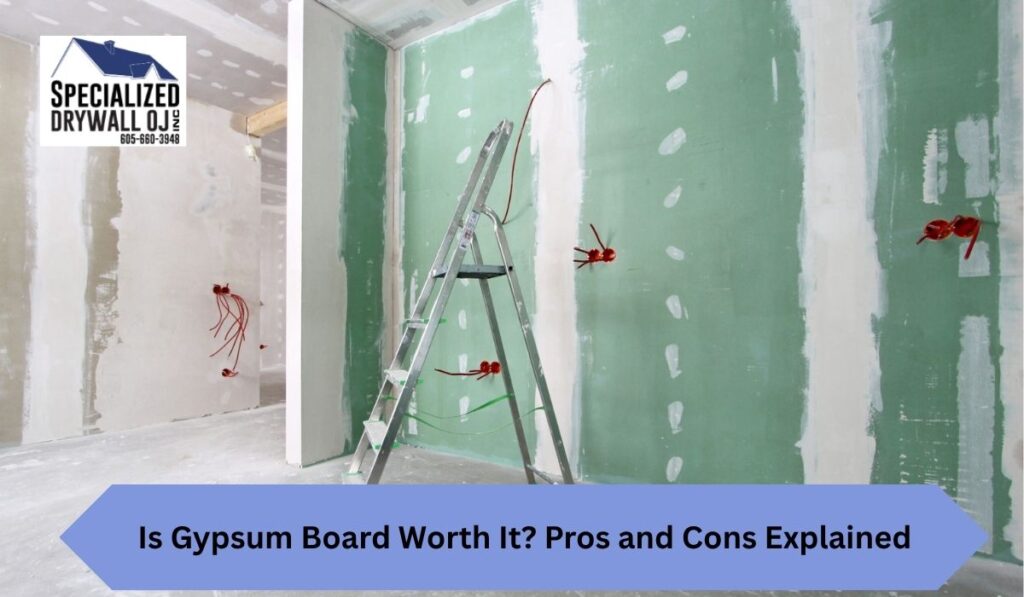
What Does “Worth It” Really Mean?
Before deciding, you need to look at three things:
- Cost vs lifespan
- Appearance vs maintenance
- Installation vs long-term performance
Gypsum board can be a good choice—but only when these factors match your needs.
Pros of Gypsum Board (What Makes It Popular)
Easy and Fast Installation
Gypsum boards are lightweight and can be cut and fixed quickly. This reduces labor time and makes them suitable for both homes and commercial projects.
Clean Finish for Interiors
The surface is smooth and uniform, which helps in painting and interior finishing. It creates a neat ceiling or wall appearance.
Fire Resistance
Gypsum naturally contains water, which slows the spread of fire. This adds an extra layer of safety in buildings.
Sound Reduction
Gypsum boards help reduce noise between rooms due to their dense structure.
Cost and Availability
Compared to materials like wood or metal, gypsum board is generally affordable and widely available in different sizes.
Suitable for Multiple Uses
It is used for:
- False ceilings
- Partition walls
- Decorative interior elements
Cons of Gypsum Board (Reality Check)
Water Damage Risk
One of the biggest drawbacks is moisture sensitivity. Prolonged exposure to water can cause swelling, mold growth, or damage to the board.
Not Load-Bearing
Gypsum board is not designed to carry heavy weight. It is only used for surface covering, not structural support.
Surface Damage and Dents
It is relatively soft compared to concrete or brick, so that impacts can cause dents or cracks.
Repair Can Be Difficult
Fixing damaged sections often requires replacing part of the board, and patches may still be visible.
Limited Performance in Humid Areas
In areas like bathrooms or kitchens, standard boards may not perform well unless special moisture-resistant versions are used.
Pros vs Cons (Quick Comparison)
| Pros | Cons |
| Fast installation | Sensitive to water |
| Smooth finish | Can dent easily |
| Fire-resistant | Not load-bearing |
| Reduces noise | Repairs are not simple |
| Affordable option | Limited use in humid areas |
What Competitors Often Miss
Many articles only highlight benefits, but real performance depends on details like:
- Board thickness and density
- Type (standard vs moisture-resistant)
- Metal framework quality
- Installation accuracy
Even good material can fail if these are ignored.
When Gypsum Board Is Worth It
Gypsum board makes sense if:
- You want a clean ceiling finish
- The space is dry and indoor
- You need a quick installation
- You plan to add lighting designs
When It May Not Be Worth It
You should reconsider if:
- The area has high humidity or leakage
- You need to hang heavy items from the ceiling
- Long-term durability in rough conditions is required
Real Cost vs Value
Gypsum board is not just about initial cost. You should also consider:
- Maintenance over time
- Possible repairs due to moisture or cracks
- Replacement costs if damage occurs
When installed properly, it can last many years, making it reasonable in terms of overall value.
Buyer Mistakes That Affect Value
Many people feel gypsum board is “not worth it” because of these mistakes:
- Choosing low-quality boards
- Ignoring moisture conditions
- Poor installation work
- Using the wrong board type for the area
These issues lead to early failure, not the material itself.
Practical Advice Before You Decide
Before choosing gypsum board:
- Check if the area is moisture-prone
- Ask for the proper board type (standard or moisture-resistant)
- Confirm frame quality and spacing
- Plan lighting and fixtures in advance
Working with experienced providers like Specialized Drywall can reduce the chances of common installation problems and help you get better results.
Final Thoughts
Gypsum board can be worth it, but only in the right conditions. It works well for interiors where appearance and quick installation matter. At the same time, it has clear limitations, especially with moisture and impact.
The decision should be based on where and how you plan to use it—not just how it looks.
Call to Action
If you’re planning a ceiling or interior project and want to choose the right material for your space, reach out to Specialized Drywall for expert guidance and installation support.
FAQs
Q1: Is gypsum board a good investment for ceilings?
Yes, if used in dry indoor areas and properly installed, it can last many years and provide a clean finish.
Q2: What is the biggest disadvantage of gypsum board?
Its sensitivity to moisture is the main concern, especially in humid areas.
Q3: Does gypsum board break easily?
It is not very hard so a strong impact can cause dents or cracks.
Q4: Is gypsum board better than traditional plaster?
It is faster to install and gives a more uniform finish, but both have their own use cases.
Q5: Can gypsum board handle heavy weight?
No, it is not suitable for holding heavy objects without proper support.
Q6: How long does gypsum board last?
With proper installation and maintenance, it can last 10–20 years.
Q7: Is gypsum board suitable for all rooms?
It works best in dry areas. For wet areas, special moisture-resistant boards are required.