
Fire safety is one of the most important aspects of any residential or commercial property. While smoke detectors and sprinkler systems often get the most attention, passive fire protection inside your walls plays a critical role in slowing the spread of flames. One of the most common and effective materials used for this purpose is fire-rated drywall.
Understanding fire-rated drywall is essential for homeowners, property managers, and building owners. Whether you are building a new home, remodeling a garage, or upgrading a commercial property, knowing how fire-resistant drywall works and where it is required can protect both your investment and the lives inside your building.
This guide explains everything you need to know in simple, practical terms.
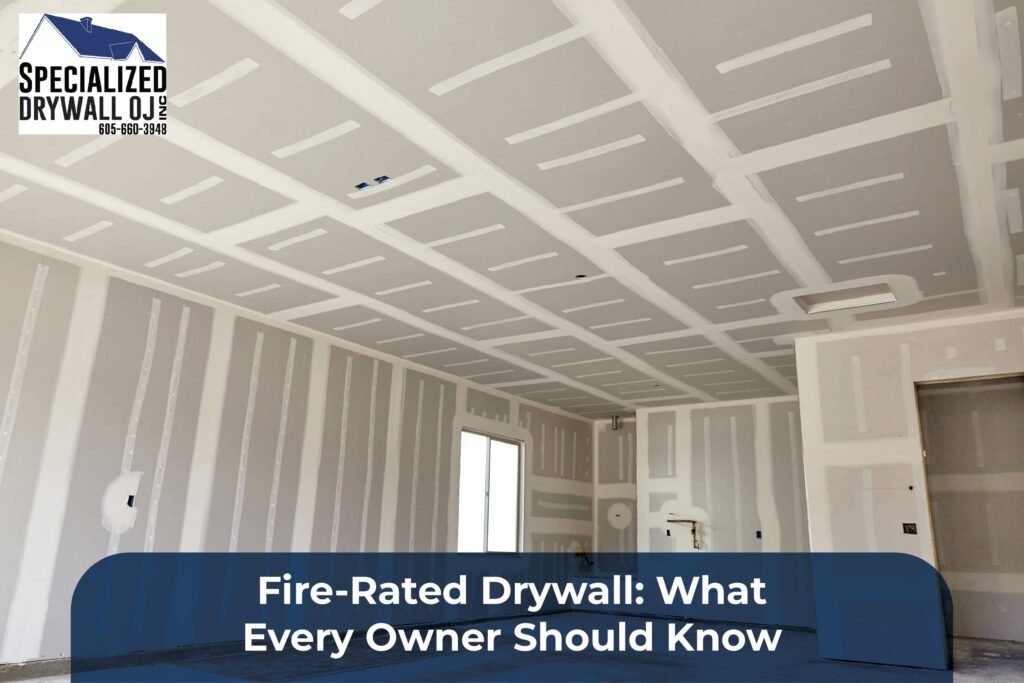
What Is Fire-Rated Drywall?
Fire-rated drywall, sometimes referred to as fire-resistant drywall, is a specially designed gypsum board engineered to slow the spread of fire. Unlike standard drywall, it contains additional fire-resistant components, including glass fibers and other additives, within the gypsum core. These materials help the board maintain structural integrity for a longer period when exposed to high temperatures.
It is important to clarify that fire-rated drywall is not “fireproof.” Instead, it is designed to withstand fire for a specified period, typically measured in hourly ratings. That extra time can make a critical difference during an emergency, allowing occupants to evacuate and giving firefighters a better chance to control the blaze.
The key advantage of fire-rated drywall is its ability to act as a protective barrier, slowing heat transfer between rooms and floors.
How Fire Ratings Work
When you see terms like “1-hour fire rating” or “2-hour fire rating,” those numbers refer to how long a specific wall assembly can withstand fire exposure under standardized testing conditions. These tests are conducted in accordance with recognized standards, including ASTM and UL procedures.
A fire rating applies to the complete wall system, not just the drywall panel. That system includes:
- Stud framing (wood or steel)
- Insulation (if required)
- Fasteners and joint treatment
- Number of drywall layers
- Panel thickness (often 5/8 inch for Type X)
For example, a 1-hour fire-rated wall assembly means the wall can resist fire penetration for at least one hour under controlled testing conditions. This rating helps prevent fires from spreading quickly from one room or unit to another.
Understanding that the rating applies to the entire system is crucial. Improper installation can compromise the rating entirely.
Where Fire-Rated Drywall Is Required
Many property owners are surprised to learn that fire-rated drywall is required in certain areas of a building. Local building codes often require it in specific areas to improve fire safety.
Common locations include:
- Garage walls attached to a home
- Ceilings between the living space and the garage
- Shared walls in duplexes and townhomes
- Stairwells and exit corridors
- Mechanical room
- Commercial hallways
- Multi-family building separations
In residential construction, garages are one of the most common areas requiring fire-rated drywall. Because garages store vehicles, fuel, and combustible materials, building codes typically require a minimum fire barrier between the garage and living areas.
For commercial properties, fire-rated drywall plays an even greater role in meeting life safety regulations.
Types of Fire-Rated Drywall
Not all fire-resistant drywall is the same. Different types are designed for different performance levels and applications.
The most common options include:
- Type X Drywall—The standard fire-rated option, typically 5/8 inch thick and designed to achieve a 1-hour rating in approved assemblies.
- Type C Drywall—Enhanced fire-resistant board that performs better under extreme heat and may achieve longer ratings in certain assemblies.
- Moisture-Resistant Fire-Rated Drywall—Combines fire protection with resistance to humidity; often used in basements or utility rooms.
- Impact-Resistant Fire-Rated Panels—Used in high-traffic commercial areas for durability and fire performance.
Choosing the right type depends on your local code requirements and building use. Consulting a professional drywall contractor ensures compliance and proper installation.
Fire-Rated Drywall vs Regular Drywall
Many property owners wonder whether fire-rated drywall is worth the additional cost compared to regular drywall. The differences are significant.
Regular drywall is designed primarily for interior finishing. It offers minimal fire resistance and is not suitable for the required fire-barrier areas.
Fire-rated drywall:
- Contains reinforced gypsum core
- Slows heat transfer
- Maintains integrity longer under high temperatures
- Meets code requirements in designated areas
- Provides additional protection for occupants
Although fire-rated drywall costs more than standard panels, the added safety and compliance benefits make it essential where required.
Benefits of Installing Fire-Rated Drywall
Installing fire-rated drywall offers both safety and cost savings. Beyond simply meeting code, it enhances overall building protection.
Key benefits include:
- Slowing the spread of flames
- Increasing evacuation time
- Protecting structural framing
- Improving compartmentalization between rooms
- Enhancing building code compliance
- Potentially lowering liability risks
In multi-family and commercial buildings, fire-rated drywall is a core component of a passive fire protection strategy. Even in single-family homes, it provides peace of mind in critical areas such as garages and utility rooms.
Installation Matters: Common Mistakes to Avoid
One of the biggest misconceptions about fire-rated drywall is that simply installing the board guarantees protection. In reality, installation quality determines whether the fire rating performs as intended.
Common installation mistakes include:
- Using incorrect fasteners
- Failing to stagger seams properly
- Leaving gaps around outlets or pipes
- Improper joint taping
- Not following the tested assembly guidelines
- Using an incorrect panel thickness
Because the fire rating applies to the entire wall system, any deviation from approved assembly methods can void the rating. This is why professional installation is highly recommended, especially in commercial settings.
Cost Considerations
Fire-rated drywall typically costs more than standard drywall due to its reinforced composition and performance standards. Material costs vary depending on thickness, brand, and region.
In addition to material pricing, labor may increase slightly due to:
- Heavier panel weight
- Additional layers (in some assemblies)
- Strict compliance requirements
- Inspection processes
However, the cost difference is modest compared to the potential consequences of fire damage or code violations. When required by building codes, installing fire-rated drywall is mandatory, not optional.
How to Determine If Your Property Has Fire-Rated Drywall
If you are unsure whether your existing walls include fire-rated drywall, there are a few steps you can take.
Look for:
- Stamps or markings on exposed drywall edges
- Documentation from original construction
- 5/8-inch panel thickness in garage ceilings
- Building plans specifying Type X drywall
If you are remodeling or unsure about compliance, a licensed contractor can inspect and verify whether your wall assemblies meet current fire code standards.
When Should You Upgrade to Fire-Rated Drywall?
There are several situations where upgrading makes sense:
- Renovating an older home
- Converting a garage into a living space
- Finishing a basement
- Remodeling multi-family properties
- Updating commercial buildings to meet new codes
If your property lacks required fire separation barriers, upgrading is not only smart—it may be legally necessary.
Conclusion
Fire-Rated Drywall: What Every Owner Should Know comes down to one essential truth—fire protection inside your walls matters more than you think. Fire-rated drywall is not simply another construction material; it is a life safety component that slows fire spread, protects structural integrity, and helps occupants escape safely.
From understanding hourly fire ratings to knowing where it is required and how it must be installed, property owners should view fire-resistant drywall as a long-term safety investment. Whether you are building new, remodeling, or upgrading, proper selection and installation ensure your property meets code requirements and maintains the highest safety standards.
If you are unsure about your building’s compliance or planning a renovation, consulting experienced drywall professionals is the safest next step.
FAQs
Ans: A 1-hour fire rating means the wall assembly can resist fire exposure for at least one hour under standardized testing conditions.
Ans: Yes, it is commonly required between attached garages and living spaces, as well as in certain shared walls in multi-family properties.
Ans: No. Fire-rated drywall is fire-resistant, not fireproof. It slows the spread of fire but does not make a building fireproof.
Ans: While possible, proper installation is critical for maintaining fire ratings. Professional installation is recommended for code compliance.
Ans: It costs more than regular drywall, but the difference is modest compared to the safety benefits and code compliance requirements.