
When upgrading a home, most people focus on kitchens, flooring, or paint. Wallboard is often ignored—even though it plays a major role in how a home looks, feels, and performs over time.
But is wallboard actually worth the money? Or is it just a design choice with no real return?
This guide is written for homeowners, new buyers, and small contractors who want clear answers grounded in real value, not assumptions.
What Does “Investment” Mean in Wallboard?
Before deciding, it’s important to define what “investment” really means in this case.
A good wallboard investment should:
- Lasted for years without frequent repairs
- Improve the look of the space
- Add practical benefits like insulation or protection
- Increase or support resale value
If a material looks good but lacks durability, it is not a strong investment.
Types of Wallboard Used in Homes
Wallboard comes in different forms, each with its own purpose:
- Gypsum board (drywall / Sheetrock)
- MDF panels
- PVC panels
- Wooden panels
- Cement boards
Each type varies in cost, durability, and long-term value.
Is Wallboard a Good Investment? (Simple Answer)
Yes, wallboard can be a good investment—if you choose the right type and use it in the right place.
- Standard drywall → budget-friendly and widely used
- Panel-based wallboard → adds visual and functional value
- Specialized boards → better for durability and moisture resistance
The value depends more on selection and installation than on the material alone.
How Wallboard Adds Value to a Home
Improves Interior Appearance
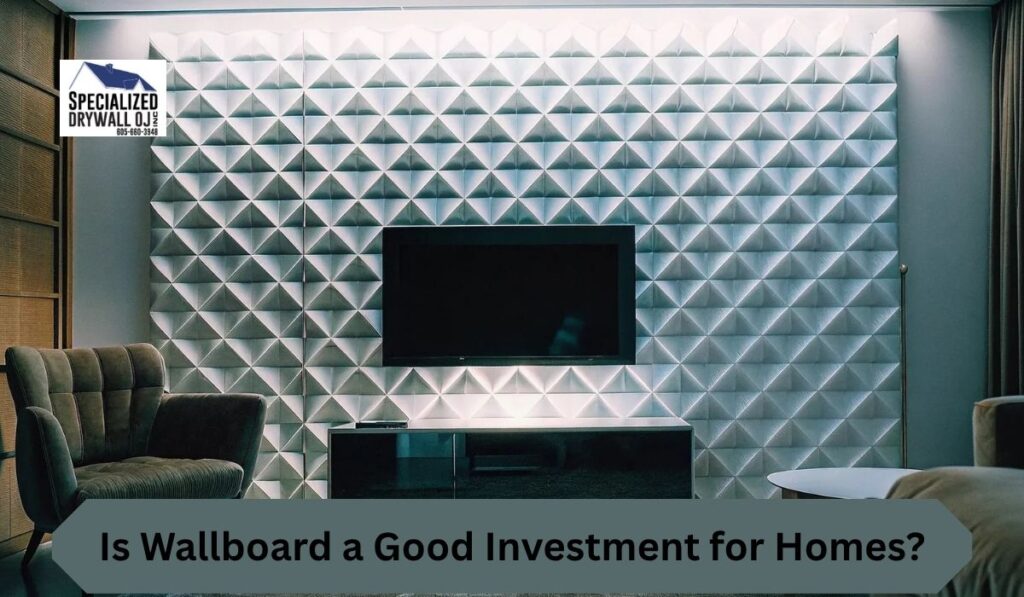
Wallboard can turn plain walls into visually appealing surfaces. Paneling styles add depth and character, making spaces more attractive to buyers.
Increases Resale Appeal
Homes with well-finished walls and design elements stand out in the market. Buyers are more likely to prefer spaces that look complete and well-maintained.
Adds Insulation Benefits
Wall panels can act as an extra layer that helps regulate indoor temperature, potentially reducing energy costs over time.
Helps with Noise Reduction
Wallboard, especially paneling, can reduce sound transfer between rooms, making the home more comfortable.
Protects Walls from Damage
Wall panels can protect surfaces from dents, scratches, and everyday wear, reducing the need for repairs.
Covers Imperfections
Wallboard can hide uneven surfaces, old damage, or wiring, improving the overall look without major reconstruction.
Cost vs Value (What You Should Consider)
Low-Cost Wallboard (Drywall)
- Lower upfront cost
- Easy to install
- May require repairs over time
Higher-Cost Wall Panels
- Higher initial cost
- Better durability
- Lower maintenance over time
In many cases, spending slightly more upfront can reduce long-term repair costs.
Long-Term Value Breakdown
| Factor | Standard Wallboard (Drywall) | Panel-Based Wallboard |
| Initial Cost | Low | Higher |
| Durability | Moderate | High |
| Maintenance | Medium | Low |
| Visual Appeal | Basic | Strong |
| Resale Impact | Neutral | Positive |
Wall panels often provide more long-term value, especially in visible areas of the home.
When Wallboard Is a Good Investment
Wallboard makes sense when:
- You want to improve the interior appearance
- You plan to stay in the home long-term
- You want better insulation or noise control
- You are preparing the home for resale
When It May Not Be Worth It
It may not be the right investment if:
- You are working on a very tight budget
- The area is temporary or low-use
- Installation quality is not reliable
Poor installation can reduce the value of even high-quality wallboard.
What Most People Overlook
Many buyers focus only on cost, but ignore:
- Material type and quality
- Installation standards
- Room conditions (moisture, usage)
- Long-term maintenance
These factors decide whether wallboard becomes a good investment or a future expense.
Common Mistakes Buyers Make
Avoid these mistakes:
- Choosing the cheapest option without checking durability
- Using decorative panels in high-moisture areas
- Ignoring long-term maintenance costs
- Hiring inexperienced installers
Practical Advice Before You Invest
Before selecting wallboard:
- Identify where it will be used (dry or влаж area)
- Compare lifespan, not just price
- Choose the right type (standard, moisture-resistant, etc.)
- Focus on proper installation
Working with experienced providers like Specialized Drywall can help ensure the right material is used correctly, which directly affects long-term value.
Final Thoughts
Wallboard is more than just a surface—it affects appearance, durability, and even resale potential. When chosen wisely, it can be a worthwhile investment that improves both comfort and property value.
The key is not just choosing wallboard but choosing the right type for the right space.
Call to Action
If you’re planning to upgrade your walls and want to make a smart investment, contact Specialized Drywall for a tailored recommendation based on your space, budget, and long-term needs.
FAQs
Q1: Does wallboard increase home value?
Yes, decorative or high-quality wall panels can improve visual appeal and attract buyers.
Q2: Is drywall a good investment for homes?
It is a cost-effective option, but may require maintenance over time.
Q3: Which wallboard type adds the most value?
High-quality paneling and durable materials usually add more value than basic drywall.
Q4: Is wall paneling better than plain walls?
Paneling adds design, protection, and sometimes insulation benefits.
Q5: How long does the wallboard last?
Depending on material and maintenance, it can last 10–20 years or more.
Q6: Is wallboarding expensive?
Costs vary widely depending on material, design, and installation.
Q7: How do I choose the right wallboard?
Choose based on your budget, room conditions, and long-term usage needs.